Services

Technology must solve problems, not create new ones.

Legacy platforms slow down change. Data is scattered across systems and teams. Tracking yields conflicting figures. AI works in pilot projects but doesn’t make it into production.

Valanor analyzes the root cause and develops the systems, data infrastructures, and applications that resolve these bottlenecks.

From technical assessments to software and platform development to data and AI engineering.

As systems grow, dependencies often grow as well.

Over the years, companies introduce new platforms, applications, and data sources. Individual decisions often make sense. Taken together, however, they create a system landscape in which changes require more and more coordination.

A CMS cannot be modified independently of the front end. Data must be manually consolidated between ERP, CRM, and analytics systems. Marketing and sales work with different sets of numbers. An AI prototype works from a technical standpoint but lacks reliable access to the systems necessary for the actual process.

These problems can rarely be solved by adding yet another tool.
The key is to understand which technical dependencies are actually limiting operations—and to address them precisely there.

Five solutions for various technical bottlenecks.

The right approach depends on what isn't working today. That's why not every project starts with the same service.

When a modernization project is on the horizon, a data initiative is stalling, or existing systems are becoming increasingly burdensome, the first step is to identify the root cause.

We analyze the architecture, interfaces, data flows, and processes, and use this analysis to develop a robust roadmap for the next technical decisions.

When CMS systems, applications, and integrations have evolved over time, even a relatively simple change can quickly turn into a full-scale project.

We modernize existing platforms, resolve technical dependencies, and develop software architectures that can be evolved in a controlled manner.

From CMS and legacy migrations to custom web and desktop applications.

When GA4, CRM, and advertising platforms deliver different results, the problem is often not a lack of another dashboard.

What’s missing is a robust measurement infrastructure.

We develop tracking, consent, and data structures that enable marketing and usage data to be collected, processed, and transmitted to analytics and data platforms in a controlled manner.

Search & AI Visibility

Potential customers no longer rely exclusively on traditional search engines for their research.

Google, ChatGPT, Perplexity, and other systems are used in tandem to compare and evaluate technologies, products, and providers.

We combine technical SEO, information architecture, structured data, and content in a way that allows search and AI systems to understand what a company is known for.

Data & AI Engineering

Data platforms, machine learning models, and generative AI only become effective when they are reliably integrated with existing applications and processes.

We develop data pipelines, data models, and AI applications for production use—ranging from analytics engineering and computer vision to generative AI.

Not every technical problem requires a new system.

An existing platform may be technically outdated yet still serve its purpose.
Conversely, a modern technology stack can become a bottleneck if systems are tightly coupled, data ownership remains unclear, or every change affects multiple teams simultaneously.

That’s why we don’t replace systems solely based on their age.
We first determine which component is causing the actual problem.
Sometimes a complete migration makes sense. Other times, a new interface, a modified data model, or the decoupling of individual components is sufficient.

The same applies to data and AI.

Not every manual process needs machine learning. Not every reporting issue requires a new data platform. And not every AI use case justifies a complex model architecture.

Technology makes sense when it eliminates a specific limitation.

From a technical problem to a production system.

Our services complement one another in areas where complex systems cannot be addressed by a single discipline.

1. Understanding the Initial Situation

We start with the process or system that currently creates effort, risk, or dependencies.

To do this, we examine the relevant applications, data flows, interfaces, and responsibilities.

2. Identify the actual bottleneck

Not every visible problem is necessarily the cause.

Slow releases, for example, can result from a coupled architecture. Unreliable reporting may stem from tracking issues. An AI project may fail due to missing data structures rather than the model itself.

We distinguish between symptoms and causes.

3. Define the Target Architecture

A technical vision emerges from business and operational requirements.
We define system boundaries, data flows, integrations, responsibilities, and the necessary technology.

4. Develop and integrate

We develop the necessary platforms, applications, data structures, and integrations, and connect them to the existing system landscape.

Existing systems continue to be used wherever they reliably fulfill their purpose.

5. Ensure operational reliability

A system isn't finished once it's been deployed.

Data quality, stability, performance, monitoring, and technical responsibilities must continue to function properly during ongoing operations.

The right way to start depends on the problem.

Not every company needs a strategy phase right away.

If it’s already clear that a platform needs to be migrated, we can dive straight into architecture and implementation.

If an existing tracking setup doesn’t provide reliable figures, we start with the measurement infrastructure.

If data is scattered across ERP, CRM, and production systems, the work may begin with the data flows.

And if it’s not yet clear what technical changes are necessary, Consulting & Diagnostics first establishes the basis for decision-making.

The approach is tailored to the specific system problem—not to a fixed consulting process.

Frequently Asked Questions About Our Services

What services does Valanor offer?

Valanor works on complex technical challenges related to software, data, and AI. Its services are divided into five areas: Consulting & Diagnostics, Platform Engineering, Measurement Infrastructure, Search & AI Visibility, and Data & AI Engineering.

Depending on the specific situation, these services can be used individually or combined.

What sets Valanor apart from a traditional IT consulting firm?

Our focus is on technical diagnosis and implementation.

We do not develop general technology or digital strategies that are disconnected from the existing system. We analyze specific bottlenecks, develop the necessary architecture, and implement the relevant systems and integrations.

Strategic decisions arise directly from technical and operational realities.

Does Valanor work exclusively with certain technologies?

No.

Technologies are selected based on the specific problem and the existing system landscape.

These may include, for example, Sanity, Payload, Next.js, and FastAPI in the software domain, or Databricks, dbt, Airflow, and BigQuery in the data domain.

What matters is not the tool itself, but which architecture makes sense for the specific use case.

Can Valanor modernize existing systems without having to develop everything from scratch?

Yes.

A complete redesign is not necessarily the best solution.

We analyze which components still function properly, which technical dependencies prevent changes, and which parts should be specifically modernized or replaced.

Migrations can be carried out in stages and, if necessary, in parallel with existing operations.

Does Valanor also support companies with AI projects?

Yes.

In the Data & AI Engineering division, we develop data and AI systems for production use.

This includes, among other things, data platforms, analytics engineering, machine learning, computer vision, and generative AI.

The focus is on integration into real-world data flows, applications, and operational processes—not on isolated proof-of-concept demonstrations.

When is Consulting & Diagnostics the right place to start?

Consulting & Diagnostics is useful when a problem is apparent but the appropriate technical solution has not yet been determined.

This may be the case prior to a platform migration, a major data initiative, an architectural decision, or the production deployment of AI.

The goal is to establish a solid basis for decision-making before committing to major investments.

The Next Step

You don't have to know the solution yet.

Perhaps you already know which platform needs to be modernized.

Perhaps you only see the symptoms: slow releases, inconsistent data, manual processes, or an AI project that isn’t getting off the ground.

That’s enough of a starting point.

Together, we’ll analyze what’s behind these issues and determine which technical steps make sense.

Ausgangslage besprechen

Aleksandar Basara

Managing Director

[email protected]

+49 (0) 711 16 44 6 83

Lindenspürstrasse 22, 70176 Stuttgart

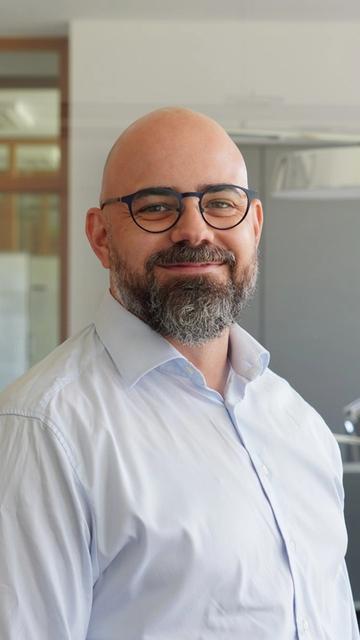
Aleksandar Basara - Managing Director and CTO at VALANOR